From Hazard to Control: A Practical Framework for Risk Assessment
A practical, comprehensive guide to workplace risk assessment, from hazard identification and risk prioritization to controls, monitoring, and organizational practice.
Introduction
Risk assessment has become a fundamental cornerstone of occupational health and safety management over the past few decades. It serves as both a legal obligation in many jurisdictions and a critical tool for protecting workers, organizational assets, and business operations. At its core, risk assessment is really about taking a systematic look at your workplace to identify what could go wrong and taking sensible steps to prevent it from happening.
The basic idea is simple: look for hazards, figure out how bad things could get if something goes wrong, and then do something about it. But as we’ll see throughout this article, there’s quite a bit more to it when you dig deeper. This guide brings together insights from leading safety organizations and international standards to provide a comprehensive understanding of how risk assessment actually works in practice.
Before diving into the comprehensive guide, consider the following questions, which the article will answer in detail:
What is the difference between a “hazard,” a “risk,” and a “vulnerability”?
What are the five essential steps of a systematic risk assessment process?
What is the hierarchy of controls, and how is it used to reduce risk?
How can an organization build an effective and sustainable risk assessment culture?
TL;DR
What it is: A systematic process to identify workplace hazards, evaluate risks (probability × severity), and implement controls to prevent injuries.
The 5-Step Process:
- Prepare:Define scope, gather info, assemble competent team.
- Identify hazards:Walk through workplace, consult workers, review records.
- Assess risk level: Evaluate likelihood and impact for each hazard.
- Prioritize:Decide what’s acceptable vs. needs immediate action.
- Implement & monitor:Apply controls, train workers, verify effectiveness.
Hierarchy of Controls (best to worst):
Elimination → Substitution → Engineering controls → Administrative controls → PPE
Key Takeaway: Risk assessment isn’t just legal compliance, it’s an ongoing cycle that prevents harm by addressing hazards before incidents occur. Success requires leadership commitment, worker involvement, and integration into daily operations. The goal is informed decisions about acceptable risk, not zero risk (which is impossible).
Understanding the Basics: What is Risk Assessment?
Before we dive into the details, let’s clarify what we’re actually talking about. Risk assessment is the overall process of identifying hazards, estimating and evaluating the risks associated with those hazards, and determining what to do about them. It’s not just about making a list of dangerous things; it’s about understanding how likely problems are to occur and how serious they could be.
Think of risk as having two key parts that multiply together. First, there’s the probability or likelihood that something bad will happen. Second, there’s the severity or impact if it does happen. A useful way to think about this is:
Risk = Probability × Severity
This means that even if something is quite likely to happen, if the consequences are minor, the overall risk might be acceptable. On the flip side, even if something is unlikely, if the potential consequences are catastrophic, you need to take it very seriously.
Let’s look at a practical example. Consider someone working in an office who might trip over a computer cable. This happens fairly often (moderate probability), but usually results in nothing more than embarrassment or perhaps a minor bruise (low severity). Compare this to someone working at height without proper fall protection. Falls from height are less frequent (lower probability), but when they do happen, the consequences can be fatal (extreme severity). The second scenario clearly presents a much higher risk that demands immediate attention.
Why Risk Assessment Matters
You might be wondering why organizations should invest time and resources in formal risk assessments. Beyond the obvious legal requirements, there are several compelling reasons.
First and foremost, risk assessments create awareness. They force organizations to actually look at their operations systematically rather than just hoping nothing goes wrong. This awareness extends beyond management; when workers understand the hazards they face and the controls in place to protect them, they become active participants in maintaining safety.
Risk assessments also help identify who might be at risk. It’s not just about your regular employees. Think about cleaners who work after hours, contractors who come in for specific projects, visitors who might not be familiar with your workplace, or even members of the public who could be affected by your activities. Each of these groups might face different risks or need different protections.
From a business perspective, risk assessments help determine whether existing controls are adequate or whether you need to do more. They provide a rational basis for prioritizing safety improvements and allocating limited resources where they’ll do the most good. Nobody has unlimited time and money, so being smart about priorities makes sense.
Perhaps most importantly, risk assessments prevent injuries and illnesses before they happen. This is especially true when assessments are done at the design or planning stage of new processes or facilities. It’s much easier and cheaper to design safety in from the start than to retrofit it later after someone gets hurt.
The Legal Framework
Risk assessment isn’t just good practice; it’s required by law in most developed countries. The European Union’s Framework Directive 89/391/EEC on Safety and Health of Workers at Work established risk assessment as a fundamental employer obligation, and this has been implemented into national law across EU member states.
Similar requirements exist in other jurisdictions under different frameworks. The key point is that the law expects employers to take a proactive approach to safety. You can’t just wait for accidents to happen and then react. You need to identify risks in advance and take reasonable steps to control them.
What does “reasonable” mean in this context? The law generally doesn’t expect you to eliminate all risk; that would be impossible. But you are required to protect people as far as “reasonably practicable.” This means balancing the level of risk against the time, trouble, and cost of controlling it. Very high risks demand immediate action regardless of cost, while minor risks might be acceptable with simple, low-cost controls.
Key Concepts and Terminology
To really understand risk assessment, we need to get clear on some basic terminology. These aren’t just academic distinctions; they matter when you’re actually doing assessments.
A hazard is anything that has the potential to cause harm. This could be a chemical substance, a piece of machinery, a work process, or even something as simple as a wet floor. Hazards are typically categorized into groups: biological hazards like bacteria or viruses, chemical hazards like solvents or acids, physical hazards like noise or radiation, ergonomic hazards related to repetitive movements or awkward postures, psychosocial hazards like workplace stress or violence, and general safety hazards like working at height or with moving machinery.
A vulnerability is a weakness that could be exploited by a hazard. For example, if machine guards can be easily removed or bypassed, that’s a vulnerability. If workers haven’t been trained on safe procedures, that’s a vulnerability. If protective equipment isn’t maintained properly, that’s a vulnerability. Vulnerabilities increase the likelihood that exposure to a hazard will actually result in harm.
Predisposing conditions are circumstances that affect how likely it is that harm will occur. These might include things like the physical layout of a workplace, the experience level of workers, the time pressure they’re under, or environmental factors like lighting or weather conditions. Understanding predisposing conditions helps you see the bigger picture of how different factors interact to create risk.
Likelihood refers to how probable it is that a hazardous event will occur and result in harm. This isn’t always straightforward to assess. For deliberate threats like sabotage or theft, you need to consider the capability, intent, and targeting of potential adversaries. For accidental events, you look at historical data, current conditions, and the vulnerabilities present in your systems.
Severity describes how serious the consequences would be if a hazardous event occurred. This is usually described in terms like catastrophic, critical, moderate, minor, or negligible. What these terms mean specifically can vary by context. In a chemical plant, “catastrophic” might mean multiple fatalities and major environmental damage. In an office, “catastrophic” might mean a serious injury requiring hospitalization.
Finally, control measures are the actions you take to eliminate hazards or reduce risks to acceptable levels. These range from redesigning processes to eliminate hazards entirely, to providing personal protective equipment as a last line of defense.
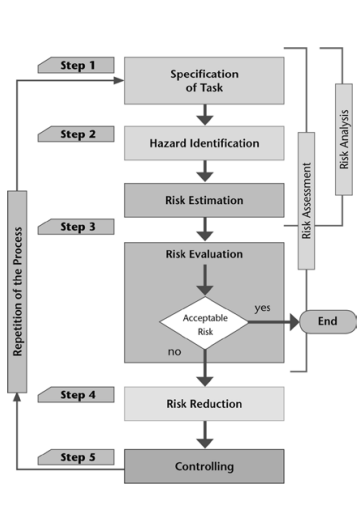
The Five-Step Process: A Practical Framework
Most recognized approaches to risk assessment follow a systematic five-step process. Let’s walk through each step in detail, with practical guidance on how to actually carry them out.
Step One: Prepare for the Assessment
Good preparation makes everything else easier. This isn’t the most exciting part, but it’s essential. The first thing you need to do is clearly define what you’re trying to achieve. What information does the assessment need to produce? What decisions will it support? Are you assessing a specific piece of equipment, a work process, an entire department, or your whole organization?
Be specific about the scope. If you’re too broad, the assessment becomes unwieldy and you lose focus. If you’re too narrow, you might miss important connections and dependencies. For example, assessing a single machine in isolation might overlook risks created by how it interacts with other equipment or processes in the work area.
You also need to think about what information you’ll need and where you’ll get it. This might include technical specifications, accident records, inspection reports, regulatory requirements, and input from workers and supervisors. Don’t overlook the expertise of the people doing the work every day; they often have insights that aren’t obvious from outside observation.
Consider who should be involved in conducting the assessment. Ideally, you want a small team that includes people with relevant technical knowledge, workers who are familiar with the actual operations, and perhaps a health and safety specialist. The team needs to be competent to carry out the assessment, which doesn’t mean everyone needs to be an expert, but collectively they should have the necessary knowledge and skills.
Document your assumptions and constraints. Are you assuming normal operating conditions, or are you also considering maintenance, startups, shutdowns, and emergency situations? What are the limitations on what you can realistically change? Understanding these boundaries upfront helps keep the assessment focused and practical.
Step Two: Identify the Hazards
Now comes the detective work. You need to systematically identify everything in your workplace that could cause harm. This requires both broad thinking and attention to detail.
Start with a workplace walkthrough. Look at the physical environment, the equipment, the materials being used, how work is organized, and how people actually do their jobs. Pay attention to the difference between how work is supposed to be done (according to procedures) and how it’s actually done in practice. Workers often develop informal workarounds, and these can sometimes create hazards that aren’t obvious from reviewing official procedures.
Talk to people. The workers who perform tasks every day are your best source of information about practical hazards. Supervisors can provide insights into near-misses and recurring problems. Maintenance workers often know about equipment issues that could create risks. Don’t just interview them; watch them work and ask questions about what you observe.
Review your records. Past accidents and near-misses are obvious places to look, but don’t stop there. Check maintenance logs for recurring equipment problems. Look at sick leave records for patterns that might indicate occupational health issues. Review any previous risk assessments or inspection reports.
Consult external resources. Manufacturers’ instructions and safety data sheets contain important hazard information. Industry guidelines and standards can help you identify hazards you might not have thought of. Regulatory requirements often specify particular hazards that must be assessed in certain situations.
Think comprehensively about different hazard categories. Mechanical hazards include things like moving parts, sharp edges, falling objects, and crushing or shearing points. Electrical hazards range from shock and electrocution to arc flash and fires. Chemical hazards involve exposure to toxic, corrosive, flammable, or reactive substances. Don’t forget biological hazards like exposure to infectious agents, physical hazards like noise and vibration, ergonomic hazards from repetitive motions or awkward postures, and psychosocial hazards like workplace stress, violence, or fatigue.
Consider all phases of operations. Most people naturally think about normal production conditions, but hazards often lurk in less routine situations. What happens during startup and shutdown? What about maintenance and cleaning? How are materials received and stored? What emergency procedures exist and could they create their own hazards?
Remember to think about everyone who could be affected. Regular workers are obvious, but what about temporary workers, contractors, cleaners, visitors, or even delivery drivers? Different groups might face different hazards or be more vulnerable to certain risks.
Step Three: Assess the Risk Level
Once you’ve identified hazards, you need to figure out how serious the associated risks actually are. This involves evaluating two key factors for each hazard: likelihood and impact.
Assessing likelihood means asking how probable it is that exposure to the hazard will actually result in harm. This isn’t always straightforward. Some hazards are constantly present but rarely cause problems because good controls are in place. Others might be intermittent but very likely to cause harm when they do occur.
For hazards related to equipment or processes, you can often look at historical data. How often has this type of problem occurred in the past, either in your organization or in the broader industry? What are the failure rates for the equipment involved? How reliable are the protective systems?
For hazards involving human behavior, likelihood gets trickier. How often are workers exposed to the hazard? How long does the exposure last? Are workers properly trained? Is the work rushed or done under pressure? Do shortcuts tempt people to bypass safety procedures? Human factors often make the difference between a hazard that exists on paper and one that actually causes injuries.
Assessing impact means considering what could happen if things go wrong. Think about the worst realistic scenario, not worst imaginable scenario. For example, the worst imaginable scenario for a car journey might involve a meteorite strike, but that’s not realistic enough to worry about. The worst realistic scenario might be a serious collision.
Consider different types of impact. Obviously, injury to people is paramount, but don’t overlook other consequences. Could an incident cause significant property damage? Environmental harm? Business disruption that affects your ability to serve customers? Legal or regulatory penalties? Reputational damage? Different stakeholders might care about different impacts, and a comprehensive assessment considers all of them.
Once you’ve assessed likelihood and impact separately, you need to combine them to determine overall risk level. This is where risk matrices come in handy. These tools help you visualize how likelihood and impact combine to create different levels of risk.
Imagine a simple grid where one axis represents likelihood (ranging from rare to almost certain) and the other represents severity (from negligible to catastrophic). By plotting each hazard on this grid, you can see which ones create high risks that demand immediate attention versus lower risks that can be addressed over time.
For example, a hazard that’s unlikely but would have catastrophic consequences if it occurred (like a major fire or explosion) might rate as high risk. Similarly, a hazard that’s almost certain to occur but would have moderate consequences (like minor cuts from a particular task) might also rate as high risk because incidents will keep happening unless something changes.
Step Four: Evaluate and Prioritize
With all your hazards assessed, you now need to decide what to do about them. The key question is whether each risk is acceptable or needs to be reduced. This is where organizational risk tolerance comes into play; different organizations might make different judgments about what level of risk they’re willing to accept.
Some risks are clearly unacceptable and require immediate action. If people are exposed to hazards that could cause death or serious injury, and adequate controls aren’t in place, work should stop until the situation is corrected. These extreme risks override cost considerations; you fix them regardless of the expense.
Other risks fall into a gray area where judgment is required. They’re significant enough that you can’t just ignore them, but not so extreme that everything must stop. These risks need to be reduced as far as reasonably practicable, which means implementing controls unless the cost would be grossly disproportionate to the benefit gained.
At the lower end, some risks might be acceptable as they are. This doesn’t mean they’re risk-free, but the combination of likelihood and severity is low enough that further risk reduction isn’t warranted. You still need to monitor these risks to ensure conditions don’t change, but you don’t need to invest in additional controls right now.
Prioritization becomes crucial when you’ve identified multiple risks that need attention but can’t address them all at once. Most organizations face this situation because resources are always limited. A good prioritization approach considers several factors beyond just the risk score.
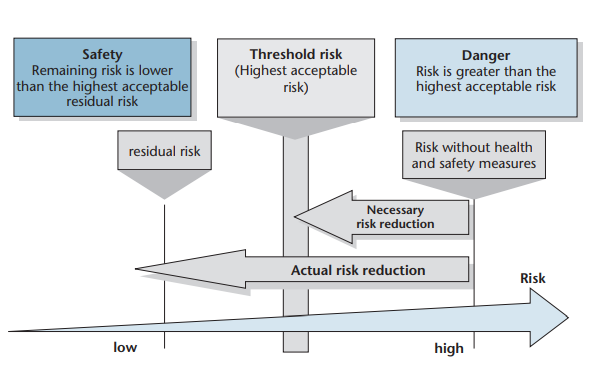
Connection between safety and risk
Time sensitivity matters. Some risks might be getting worse because equipment is aging or conditions are deteriorating. These might need attention sooner than static risks with similar scores. Legal or regulatory deadlines can also force priorities; if you’re not in compliance with a safety regulation, that typically moves to the front of the queue.
Think about the potential for risk aggregation or cascading effects. Some hazards, if they materialize, could trigger other problems or affect multiple areas of your operation. These might warrant higher priority than their individual risk score suggests.
Consider the ease of implementation. If you have several moderate risks, and one of them could be addressed quickly and cheaply while others require major investment or planning, it makes sense to knock out the easy one first. You get a quick win that demonstrates progress and commitment.
Don’t forget about worker concerns. If workers are genuinely worried about a particular hazard, even if your assessment suggests the risk is relatively low, addressing their concerns helps build trust and engagement. Sometimes the perceived risk matters as much as the calculated risk for maintaining morale and cooperation.
Step Five: Implement Controls and Monitor
This is where risk assessment translates into actual safety improvements. You need to select appropriate control measures, implement them properly, and then monitor to ensure they remain effective over time.
The selection of control measures should follow a clear hierarchy, often called the “hierarchy of controls.” This hierarchy reflects the relative effectiveness and reliability of different types of interventions.
At the top of the hierarchy is elimination: completely removing the hazard. This is always the best option when feasible. If a hazardous chemical isn’t actually needed for the process, don’t use it. If a dangerous task can be eliminated through automation or process redesign, do that. Elimination means the hazard is gone, so the risk disappears with it.
When elimination isn’t possible, substitution is the next best option. Replace something dangerous with something less dangerous. Use a less toxic chemical. Replace a high-noise process with a quieter alternative. Use mechanical lifting equipment instead of manual handling. Substitution reduces the severity of potential harm even though the hazard category remains.
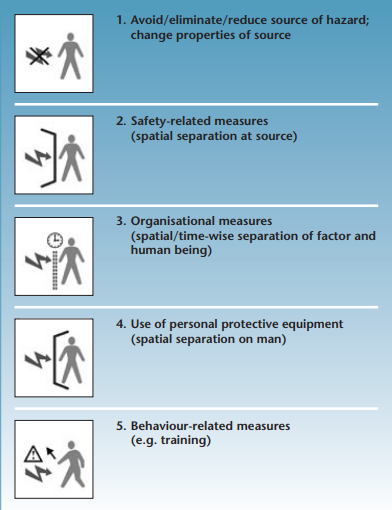
Hierarchy of risk treatment
Engineering controls come next. These are physical changes that isolate people from hazards without relying on human behavior. Machine guards prevent contact with moving parts. Ventilation systems remove airborne contaminants. Barriers separate workers from traffic or other hazards. Engineering controls are effective because they work automatically; people don’t have to remember to use them or decide to comply with them.
Administrative controls involve changing how work is organized or providing information and training. This might include rotating workers to limit exposure time, establishing safe work procedures, implementing permit-to-work systems, providing training on hazards and safe practices, or posting warning signs. Administrative controls are less reliable than engineering controls because they depend on people following rules and procedures consistently.
At the bottom of the hierarchy is personal protective equipment: things like safety glasses, hearing protection, respirators, gloves, and safety footwear. PPE is the last line of defense because it only protects the person wearing it, and only if they wear it correctly every time. PPE has important roles in controlling risk, but it should never be your only control or your first choice when better options exist.
In practice, you’ll often use multiple controls together in a layered approach. Think of it like the slices of Swiss cheese stacked together; each control is a slice with holes in it (ways it can fail), but when you stack them up, the holes don’t line up and hazards can’t get through. This “defense in depth” approach is more robust than relying on any single control measure.
Implementation requires careful planning. Who will be responsible for installing new guards, purchasing new equipment, revising procedures, or conducting training? What’s the timeline? What resources are needed? How will you communicate the changes to affected workers? How will you ensure that interim protections are in place during any transition period?
Training is almost always a crucial part of implementation. Workers need to understand the hazards they face, why specific controls are in place, how to use the controls correctly, and what to do if a control fails or seems inadequate. Training shouldn’t be a one-time event; refresher training helps maintain awareness and catches new workers who’ve joined since the last session.
Monitoring brings the risk assessment cycle full circle. You need to verify that implemented controls are actually working as intended and continue to work over time. Equipment can deteriorate, procedures can drift, workers can develop bad habits, and new hazards can emerge as conditions change.
Establish regular inspection schedules based on the criticality of controls. Some things might need daily checks, others weekly or monthly. Critical safety systems might require formal testing programs to ensure reliability. Document these inspections and follow up promptly on any deficiencies found.
Create feedback mechanisms so workers can easily report problems with controls or suggest improvements. They’re often the first to notice when something isn’t working right. Make it easy to report issues and ensure that reports are taken seriously and acted upon.
Plan for reassessment triggered by significant changes. New equipment, new processes, new materials, organizational changes, regulatory changes, or incidents should all prompt you to revisit your risk assessment. Don’t wait for the next scheduled review cycle if circumstances have materially changed.
Different Approaches and Methods
While the five-step process provides a general framework, different situations call for different specific methods. Let’s explore some of the main approaches you might use.
Qualitative risk assessment uses descriptive categories rather than numbers. You might rate likelihood as “rare,” “unlikely,” “possible,” “likely,” or “almost certain,” and severity as “negligible,” “minor,” “moderate,” “major,” or “catastrophic.” You then combine these ratings using a risk matrix to determine whether each risk is “low,” “medium,” “high,” or “critical.”
The advantages of qualitative approaches are that they’re quick, easy to understand, and don’t require detailed data or complex calculations. They work well for straightforward situations where you need a practical answer rather than precision. Communication with non-technical audiences is easier because you’re using ordinary language.
The limitations are that qualitative categories can be vague and open to interpretation. What exactly does “unlikely” mean? One person might think it means less than a 10 percent chance, another might think it means less than a 50 percent chance. This subjectivity can lead to inconsistency, especially when different people are doing assessments.
Semi-quantitative methods try to get the best of both worlds by assigning numbers to qualitative categories. For instance, you might score likelihood from one to five and severity from one to five, then multiply them to get a risk score from one to twenty-five. This gives you more granularity for prioritization while maintaining relatively simple implementation.
Semi-quantitative approaches work well for medium-complexity situations. They’re more consistent than purely qualitative methods because the scoring criteria can be defined more precisely. You can aggregate scores across multiple risks to get an overall picture. But they’re still accessible to people without statistical training.
The potential trap with semi-quantitative methods is treating the numbers as more precise than they really are. A risk score of 12 isn’t necessarily more serious than a risk score of 10 in any absolute sense; they’re both moderate risks that need attention. The numbers help with relative prioritization but shouldn’t be over-interpreted.
Quantitative risk assessment uses actual measured data and statistical techniques. You might calculate the probability of equipment failure based on reliability engineering, estimate exposure levels using monitoring data, and calculate expected costs of incidents using actuarial methods. The result is a numerical estimate of risk, often expressed as expected annual loss or similar metrics.
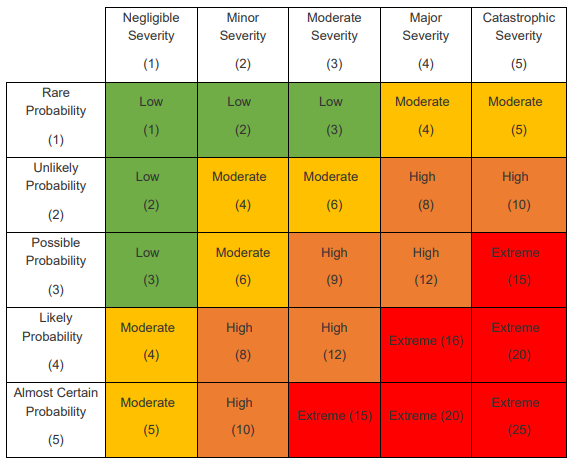
Semi-quantitative methods
Quantitative approaches are powerful for complex, high-consequence situations where the investment in detailed analysis is justified. They support sophisticated cost-benefit analysis and can handle intricate scenarios with multiple interacting factors. Financial institutions, chemical process industries, and nuclear power plants routinely use quantitative risk assessment.
However, quantitative methods require substantial data, time, and expertise. The precision can be misleading if the underlying data is poor or the model doesn’t capture all relevant factors. Not every organization needs this level of sophistication, and trying to force quantitative methods into situations where they don’t fit wastes resources and can actually obscure rather than illuminate the real issues.
Field-level risk assessments deserve special mention as a practical tool used in many industries. These are quick assessments done by workers on-site before starting a task. The idea is to catch changes or issues that weren’t anticipated in the formal risk assessment: things like equipment that’s not working quite right, unexpected weather conditions, or a congested work area.
A field-level assessment might take just five or ten minutes. The work crew gathers briefly, reviews what they’re about to do, identifies any hazards, confirms what controls are in place, and decides whether it’s safe to proceed or whether additional precautions are needed. This real-time assessment complements rather than replaces formal assessments and helps keep safety front-of-mind.
Documentation: Creating a Useful Record
Nobody likes paperwork, but good documentation serves important purposes. It demonstrates legal compliance, captures organizational knowledge, supports communication, and provides a baseline for future comparisons.
The level of detail in documentation should match the complexity and significance of what you’re assessing. For a simple, low-risk situation, a one-page checklist with notes might suffice. For a complex, high-risk operation, you’ll want a comprehensive report with detailed analysis and justifications.
At minimum, your documentation should include when the assessment was done, who did it, what was assessed (clearly defining the scope), what hazards were identified, how risks were evaluated, what control measures are in place or planned, who’s responsible for implementing them, and when they should be completed. Include the rationale for key decisions: why you prioritized certain risks, why you selected particular controls, what alternatives you considered.
Make your documentation accessible to the people who need it. Workers should know about hazards in their areas and the controls protecting them. Supervisors need the information to manage operations safely. Senior management needs summary-level information for strategic decisions. Regulators might need to see your documentation during inspections.
Keep your documentation up to date. When you implement changes, revise procedures, or conduct follow-up assessments, update the documentation accordingly. Out-of-date documentation is worse than none at all because it creates confusion about what’s actually in place.
Common Challenges and How to Address Them
In the real world, risk assessment faces practical challenges. Being aware of these and having strategies to deal with them helps keep the process effective.
Limited resources are probably the most common challenge. You’ve got competing demands on your time and budget, and safety has to compete with production, quality, customer service, and everything else. The key is to be strategic. Focus your effort where it matters most: on high-risk areas and activities. Use relatively quick methods for lower-risk situations. Share information across similar operations rather than starting from scratch each time. Build capability gradually rather than trying to do everything at once.
Resistance to change can derail even well-designed safety improvements. People get comfortable with familiar ways of working, even if they’re not the safest. New controls might seem like inconveniences that slow down work. The way to overcome this is involvement and communication. Get workers involved in identifying hazards and developing solutions; people support what they help create. Explain why changes are being made and how they’ll protect people. Listen to concerns and address them seriously. Demonstrate that management is committed to supporting the changes.
Keeping assessments current is an ongoing challenge because workplaces are dynamic. New equipment gets installed, processes change, people join and leave, regulations evolve. The temptation is to do an assessment once and then forget about it, but that’s when risk creeps back in. Build review triggers into your system; any significant change should prompt a fresh look at risks. Encourage continuous feedback from workers who might notice changes or emerging issues. Schedule periodic reviews even when nothing obvious has changed, because gradual drift might not be noticed day-to-day.
Balancing detail with practicality is tricky. Too little detail and you miss important hazards or implement inadequate controls. Too much detail and the assessment becomes an academic exercise that doesn’t get used. The solution is to match the depth of analysis to the significance of the risks. Simple situations deserve simple assessments. Complex, high-risk situations justify more thorough analysis. Don’t let perfect be the enemy of good; a reasonably thorough assessment that gets used is better than an exhaustively detailed one that sits on a shelf.
Making Risk Assessment Work in Your Organization
Successful risk assessment isn’t just about following a process; it’s about building it into your organizational culture and operations. Here are some principles that help make risk assessment truly effective rather than just a compliance exercise.
Get leadership commitment and make it visible. When senior managers participate in assessments, ask questions about risks, allocate resources to address them, and hold people accountable for managing risks, everyone else takes it seriously. Leadership sets the tone.
Involve workers throughout the process. They have the practical knowledge about how work really gets done. They know where the shortcuts are, what the pain points are, and what might work or not work in practice. Plus, involvement creates buy-in. When workers participate in identifying risks and developing solutions, they’re much more likely to follow through on implementation.
Integrate risk assessment with existing processes rather than treating it as a separate add-on. Link it to project planning, procurement decisions, operational procedures, performance management, and continuous improvement initiatives. When risk thinking becomes part of how you normally make decisions, it’s much more sustainable than having a separate safety bureaucracy.
Keep the focus on prevention rather than blame. When incidents occur, the instinct is often to find who screwed up and punish them. But most incidents result from systemic issues rather than individual failures. Use incidents as learning opportunities to identify and fix underlying problems. Create an environment where people feel safe reporting near-misses and concerns without fear of punishment.
Communicate clearly about risks and controls. Don’t assume that because you’ve done an assessment, everyone automatically knows about it. Share results with affected workers in ways they can understand. Explain the reasoning behind decisions. Be transparent about limitations and uncertainties; nobody expects perfect knowledge, but they do expect honesty.
Provide proper training and resources. Give people the skills they need to identify hazards, assess risks, and implement controls. Make sure they have the equipment, time, and support to work safely. Cutting corners on training or resources to save money is false economy; the costs of incidents are always higher.
Learn from others rather than reinventing wheels. Industry associations, safety organizations, and regulatory agencies often provide excellent guidance on common risks and effective controls. Other organizations in your industry have probably faced similar challenges and worked out solutions. Sharing knowledge and adopting proven practices is much more efficient than figuring everything out from scratch.
Finally, measure and celebrate progress. Track leading indicators like assessment completion, control implementation, and worker engagement, not just lagging indicators like injury rates. When you make improvements, acknowledge the people who made them happen. Build positive momentum by showing that effort on risk assessment leads to real improvements that people can see and feel.
Conclusion: Making Workplaces Safer
Risk assessment might seem like just another bureaucratic requirement, but at its heart, it’s about something fundamental: taking care of people. Every worker deserves to go home at the end of their shift in the same condition they arrived. Every family deserves to have their loved ones come home safe. That’s what drives effective risk assessment.
The process we’ve explored (identifying hazards, assessing risks, implementing controls, and monitoring effectiveness) provides a proven framework for systematically improving safety. It’s not complicated in principle, though it can require thoughtfulness and effort in practice. The investment is worth it, not just in avoiding the human tragedy of injuries and illnesses, but also in building more resilient, efficient, and sustainable operations.
The ultimate goal isn’t zero risk (that’s impossible) but rather informed decisions about acceptable risk and effective management of those risks. When risk assessment becomes embedded in how you plan work, make decisions, and solve problems, you create workplaces where people can be productive and safe, where hazards are anticipated rather than discovered through painful experience, and where continuous improvement is the norm.
That’s the promise of effective risk assessment, and it’s achievable for any organization willing to commit to the journey.
Originally published on Medium.