Threat Modeling and Risk Management: Thinking Ahead
Strong security is not only about adding defenses. It is also about anticipating how a system could be misused, understanding what is at stake, and deciding which problems deserve attention first. Threat modeling and risk management help teams do that before an incident forces the issue.
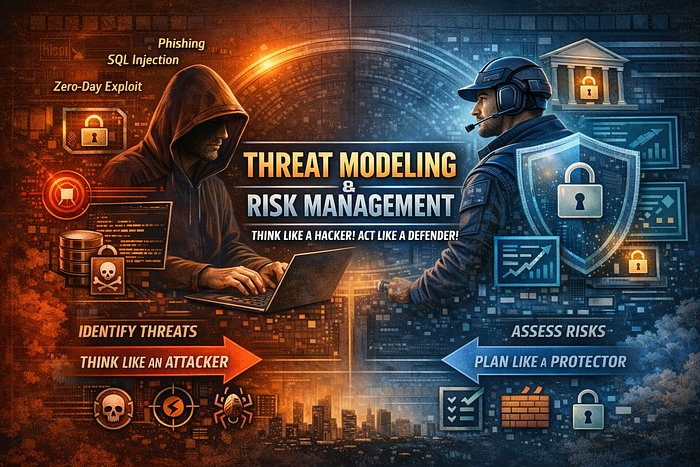
Threat modeling: look at the system from an attacker’s perspective
Threat modeling is a structured way to ask how a system might be attacked or fail. Rather than waiting for real attackers to reveal weaknesses, a team examines its design and considers plausible scenarios early.
A useful starting point is to understand:
- Assets: the data, services, accounts, and capabilities that need protection.
- Threats: people, events, or conditions that could cause harm, whether malicious or accidental.
- Weaknesses: flaws or gaps that could make a threat possible.
- Attack paths: ways a weakness might be reached or exploited.
- Trust boundaries: points where data, users, or services cross between different levels of trust.
With that picture in mind, teams can ask what could go wrong at each component or data flow, what an attacker might gain, and what safeguards could reduce the chance or impact of an incident.
Threat modeling is not a one-time exercise. Architecture, dependencies, users, and attacker behavior change, so assumptions and identified threats should be revisited as the system evolves.
Risk management: focus on what matters most
Finding a possible weakness does not automatically tell a team how urgent it is. Risk management helps evaluate potential issues and choose a proportionate response.
A practical process is to:
- Identify risks across systems, processes, and human factors.
- Assess likelihood and impact using consistent criteria and documented assumptions.
- Prioritize risks according to their potential consequences and the organization’s context.
- Choose a response: reduce the risk, avoid the activity that creates it, transfer part of its impact, or accept it with clear ownership.
- Review decisions when the system or its operating environment changes.
No score can predict the future with certainty. The goal is to make decisions transparent and consistent, not to create a false sense of precision.
How the two approaches complement each other
Threat modeling helps reveal possible attack scenarios; risk management helps decide which scenarios should be addressed first. One without the other leaves a gap: teams may overlook threats, or they may identify many concerns without a clear way to prioritize them.
Consider an online banking service. A threat-modeling discussion might identify account takeover, unauthorized transaction changes, or exposure of customer information. Risk assessment then considers how likely each scenario is, the possible financial and personal impact, and which controls are the most appropriate.
This is also where frameworks can help structure the work. STRIDE offers categories for discovering threats, while TARA provides a risk-assessment approach. I explore those two methods in a separate article on STRIDE and TARA.
From reactive defense to thoughtful design
Threat modeling and risk management are not just technical checklists. They encourage teams to think ahead, challenge assumptions, and use their security effort where it can make the greatest difference.
The core questions are simple:
What could go wrong, what would the impact be, and what should we do about it?
As systems and threats continue to change, returning to those questions helps make security a continuing part of design and decision-making—not just a reaction after something goes wrong.
This article is adapted from my original Medium article on threat modeling and risk management.